Start with a task, then follow the details. Browse the visual library, choose a topic or search for a problem. Every guide links to a useful next step and a tool where it helps.
Follow your curiosity
Find your next useful answer.
96 guides to explore

Token Silo or Token Silo XL? Choose the tray layout before the bigger box
I would choose the original Token Silo for a modest shared supply of small tokens, and the XL when long components or several card…
Read the guide →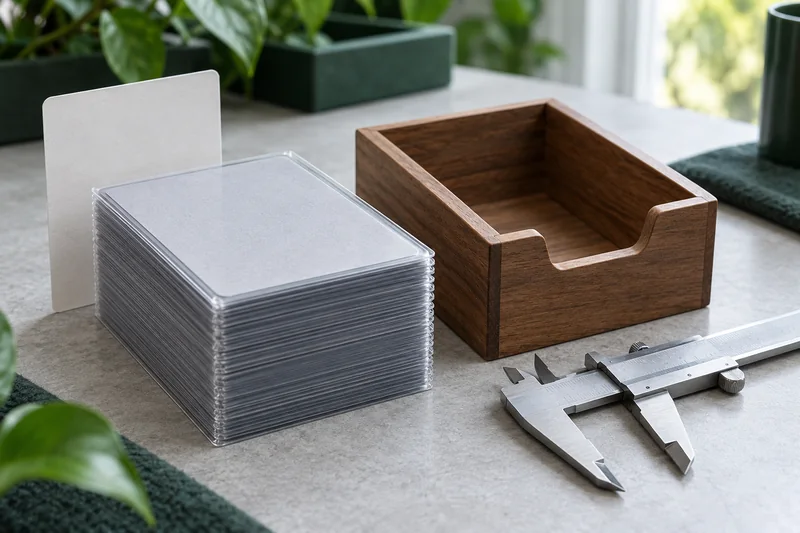
Boulder 100+ or Bastion 100+ XL for a board-game deck?
Choose a rigid deck case around the finished sleeved stack and the way you remove cards.
Read the guide →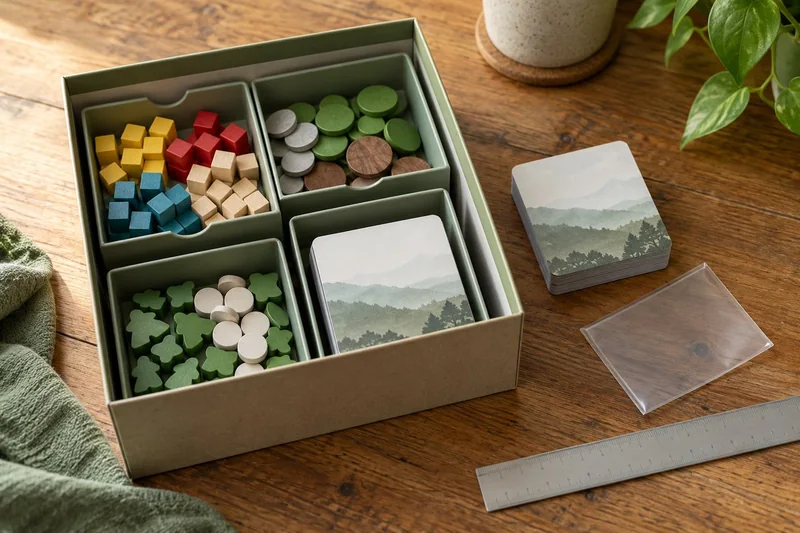
Wingspan Americas: update the storage plan before adding the new cards
Treat Americas as a mixed-component expansion, not simply another stack of bird cards.
Read the guide →
Is the Wingspan Nesting Box worth the shelf space?
I would consider the Nesting Box for a Wingspan collection that is already spread across several frequently used boxes.
Read the guide →
Choose a playmat by the usable layout and the storage route
I would buy a playmat only after marking the game’s active footprint on the table.
Read the guide →Dune Imperium Uprising inserts: do not infer Bloodlines compatibility
I would not buy an Uprising insert for a Bloodlines collection unless the seller explicitly confirms that configuration.
Read the guide →
Dragon Shield Clear/Non-Glare: a useful option for bright game tables
For cards read repeatedly under overhead lighting, Dragon Shield’s current Clear/Non-Glare board-game line is worth a sample pack.
Read the guide →
Wingspan Vision-Friendly Cards: replace the set without confusing the deck
If Wingspan’s card text is the obstacle, I would try the publisher’s Vision-Friendly cards before buying generic magnifiers or printing unofficial…
Read the guide →Find a game quickly with a simple shelf-and-box location code
Use a short location code that describes the storage place, then keep the game title and expansion contents in the inventory.
Read the guide →Bring board games on public transport: plan the route before the bag
Choose the number of games after considering the walk, stairs, transfers and return journey.
Read the guide →Ark Nova and Marine Worlds: when FS-ARNO is a sensible organizer choice
For standard components and sleeves within the maker’s stated specification, Folded Space FS-ARNO is a reasonable shortlist choice for Ark Nova plus…
Read the guide →
60-micron or premium sleeves? Spend on the decks that need it
For a large collection of lightly handled board-game cards, I would start with an accurately sized lighter sleeve and reserve thicker sleeves for decks…
Read the guide →Heat Rocky Roads: a storage audit for the growing track collection
Rocky Roads makes it worth checking the rigid-board stack separately from the card trays.
Read the guide →A damaged box corner: support the game before attempting a repair
If a corner no longer contains the contents, move the game into a suitable supporting outer enclosure and document the damage before trying a…
Read the guide →
After a wet game-night journey, separate the bag from the collection
Keep wet outer packaging away from game boxes and check the contents before returning them to a closed shelf.
Read the guide →Choose a card holder that keeps the hand readable and private
I would start with a low, stable rack that leaves every necessary icon visible from the player’s normal seat.
Read the guide →Build a sleeve shopping list that does not overbuy every card format
Count each card format separately, choose a deliberate spare allowance and round up to whole packs.
Read the guide →Make a token system work without relying on colour alone
Pair colour with a second visible distinction, such as shape, a readable label or a clearly separated compartment.
Read the guide →Silica gel in a game box: useful buffering is not a cure for damp storage
I would fix the storage environment and measure conditions before adding desiccant packets to every game.
Read the guide →Build a convention demo kit that can be reset between groups
Pack the demo around a defined teaching sequence and a repeatable reset, not the full collection.
Read the guide →Will the game fit the table? Budget the active layout, not the box
Measure the board, each player’s working area and the shared supply as separate zones.
Read the guide →Mixed sleeve batches can mark a hidden deck: check before combining
Compare sleeve backs, edges and wear before combining old and new packs in a hidden-information deck.
Read the guide →Save a solo game between sessions without losing the state
Record the game state before moving anything, then pack each active area as a labelled unit.
Read the guide →A sunny shelf can fade a collection: choose the storage position deliberately
I would keep paper-based games out of direct sunlight and choose a storage position that can be used without frequent handling damage.
Read the guide →Ship a used board game: protect the game box as part of the item
Treat the retail game box as a component to protect, not as the shipping carton.
Read the guide →Hanabi card holders: keep your own cards facing the right way
A card holder can make Hanabi more comfortable, but its orientation is the central requirement: the other players need to see the hand while…
Read the guide →Store oversized cards without treating them as a scaled-up standard deck
Measure the largest card and its sleeve, then choose a container that supports the whole face without bending it.
Read the guide →Prepare a first-play kit that teaches without overwhelming the table
Give each new player the pieces and reference information needed for the next decision, while keeping the full rules available.
Read the guide →A storage environment checklist for boxes and paper components
Short answer. Keep game materials away from leak-prone locations, direct light, and obvious heat or moisture exposure. Use manufacturer care advice for the actual…
Read the guide →Can you leave components at home? Build a rules-correct travel kit
Leave pieces behind only when the chosen rules configuration genuinely does not use them.
Read the guide →Use a side table without making the game harder to reach
Move storage and infrequent administration off the main table first.
Read the guide →Binder or card box for a growing game library? Choose by retrieval
I would use a binder for browsing individual cards and a divided box for decks that move to the table in groups.
Read the guide →Keep a print record so the next insert part actually matches
Save the exact model files, revision, slicer project and material details for an organiser you intend to repair or expand.
Read the guide →Board game storage in a small apartment: plan access first
Short answer. Use measured clear openings and an inventory of the actual boxes. Improve retrieval and component consolidation before assuming you need more furniture.
Read the guide →Moving a board game collection: an inventory-first packing plan
Short answer: Inventory and contain each game before packing moving cartons. Record where every game goes, keep carton weights manageable, and distinguish household transport…
Read the guide →
PLA or PETG for a board-game insert? Choose for the job, then test fit
For an ordinary indoor organiser with no special heat or impact requirement, I would start with a well-tuned PLA profile.
Read the guide →Do replacement cards need extra sleeves? Count the active and archived sets
Count sleeves according to the physical sets you want protected, not only the number of newly purchased cards.
Read the guide →Buy a used board game: check the pieces that can stop play
Before buying, identify the components whose absence makes the game unplayable or changes hidden information.
Read the guide →Horizontal or vertical storage: evaluate containment
Short answer. Choose orientation box by box. Vertical storage needs a documented containment arrangement; horizontal storage needs usable access and a suitable load arrangement.
Read the guide →Board game transport: choose a bag around the packed boxes
Short answer. Use the closed boxes’ outside dimensions and the bag’s usable inside dimensions. Check the opening, padding, packed weight, and component containment separately.
Read the guide →A printed tray catches only at the bottom: diagnose elephant foot
If a tray’s lower edge catches while the upper walls fit, inspect the first layers before scaling the whole model.
Read the guide →Double sleeving board game cards: check the card, sleeve and insert
Short answer: Check two separate fits: the card inside the inner sleeve, then that sleeved card inside the outer sleeve and storage channel. A…
Read the guide →Request a missing part with enough detail to identify the right replacement
Send the publisher a precise component identity, game edition and description of the problem through its current official support route.
Read the guide →How to measure a board game box inside and out
Short answer. Use inside dimensions for insert planning and outside dimensions for shelves and bags. Record the narrowest usable space and the fully packed…
Read the guide →Measure a travel case: usable space beats nominal capacity
Short answer. Compare the packed box with the main compartment and the opening. Volume or a claimed number of games cannot establish fit for…
Read the guide →Budget printed wall thickness before dividing a game box into trays
Every additional tray wall consumes usable space twice when two separate trays sit beside each other.
Read the guide →Board game card sleeves: size, thickness, and storage
Short answer. Match the sleeve to the card, then check the sleeved card and the full deck against the storage space. Card fit and…
Read the guide →A new edition is not automatically the same storage configuration
Treat a new printing, revised edition or translated copy as a fresh compatibility question when buying inserts, sleeves or replacement components.
Read the guide →A reproducible board game storage test plan
Short answer. Record the exact configuration, define a repeatable task, and preserve the raw observations. Use manufacturer claims and original tests as separate evidence.
Read the guide →Include organizer weight in a packed game’s transport plan
Weigh the game after the organizer, sleeves and accessories are installed. A bag’s geometric fit does not establish a comfortable carry or compliance with…
Read the guide →Print an insert or buy one? Compare the complete cost of a usable set
I would compare a finished, usable printed set with a delivered commercial organiser.
Read the guide →Sleeve thickness and storage: measure the deck
Short answer. A measured sample stack is more useful for storage planning than multiplying a sleeve film specification. Use the same card and sleeve…
Read the guide →Share a game inventory without sharing your home or personal details
Create a separate public or group-facing copy of the inventory containing only what people need to choose a game.
Read the guide →Board game storage: build a system that fits
Short answer. Measure the space you have, keep components contained, and choose an orientation that works for each packed box. Start with your collection…
Read the guide →Plan a game-night loadout around the table and return trip
Choose games by the available table, session plan and manageable carrying load. Pack the complete play configuration and a return checklist before optimizing how…
Read the guide →A large insert on a small printer: split the tray without losing access
Split a large organiser at a functional boundary, such as separate player kits or independent resource trays, before cutting a model arbitrarily in half.
Read the guide →Sleeved cards do not fit: diagnose the blocked dimension
Short answer. Check the sleeved card’s footprint, the stack height, and the space above the tray. Resolve the specific obstruction before changing the whole…
Read the guide →Keep useful punchboard spares without turning every offcut into clutter
Keep spare pieces whose purpose is identifiable, plus any frame or reference information needed to recognise them.
Read the guide →Plan a board game shelf by weight as well as dimensions
A box can fit geometrically while the collection exceeds the furniture’s documented load. Keep a separate weight ledger for each loaded surface and use…
Read the guide →Is an organiser worth it? Calculate the setup time you will actually save
I would buy an organiser when it reduces a repeated problem in a game that is played often enough to benefit.
Read the guide →Plan card divider height and readable tabs
Check the whole loaded deck including the tallest divider tab. A card channel can accept the sleeved cards while the divider catches the lid…
Read the guide →Separate active decks from the archive without losing the card count
Give each active deck a named container and a readable list, while keeping the archive’s index stable.
Read the guide →Two-deep board game shelves: make the back row retrievable
A second row is useful only if you can identify and retrieve it without unloading an awkward stack. Allocate depth to both packed boxes,…
Read the guide →Metal coins and premium tokens: check the storage cost of an upgrade
Before replacing cardboard counters with heavier or larger components, check the filled tray, total packed weight and the way pieces contact the board.
Read the guide →Read a deck box capacity claim before buying for a board game
Treat a quoted card count as a configuration claim. Confirm the card format, sleeve layers, divider allowance and usable internal dimensions before relying on…
Read the guide →Label game storage without sticking adhesive to the original box
Put identifying labels on removable containers, dividers or an outer sleeve before applying adhesive to the printed game box.
Read the guide →Allow retrieval clearance around a tightly fitted game box
Measure the box in its packed state, then reserve space for your actual grip and removal path. Zero geometric clearance can leave a box…
Read the guide →Choose a draw bag that preserves a blind draw, not just the token count
For a blind draw, the bag must conceal the contents and allow the required pieces to mix and be retrieved without identifying them unintentionally.
Read the guide →Check print-and-play card scale before cutting or sleeving
Print a permitted test page at the intended scale and measure a reference dimension before cutting a full deck. A PDF’s nominal page size…
Read the guide →Keep an offline rulebook reference that still points to the right edition
Save an authorised rulebook for the exact edition before travelling and keep its source and version with the game record.
Read the guide →Check shelf doors and drawer inserts before storing board games
Measure the finished internal space after a door or drawer is installed. Hinges, runners and the drawer’s own walls can remove usable space from…
Read the guide →Board game inserts: evaluate fit before features
Short answer. Check edition support, card capacity, packing order, and lid closure before choosing an insert. Removable trays are useful only when they suit…
Read the guide →Mix an expansion deck reversibly: keep a way back to the base game
Before shuffling an expansion into a base deck, record how its cards can be identified and whether any replace existing cards.
Read the guide →Evaluate a garage or attic before storing board games
Check the location’s stability, leak exposure and direct light before choosing containers. An enclosed box does not establish protection from a variable or damp…
Read the guide →Board game compatibility: check the whole configuration
Short answer. Compatibility belongs to a specific game edition, expansion list, insert version, and sleeve configuration. A matching game title is only the first…
Read the guide →Board game component inventory: check missing pieces before game night
Short answer: Compare the contents with the component list for the exact edition and language you own. Count by component type, document discrepancies, and…
Read the guide →Insert assembly: check orientation before adhesive
Short answer. Read the instructions for the exact insert revision, identify the pieces, and dry-fit where instructed. Check tray placement before making an irreversible…
Read the guide →Store board game rulebooks, maps and player aids without avoidable damage
Short answer: Keep paper components supported, away from drinks and direct sunlight, and out of compartments that bend their corners. Match the enclosure to…
Read the guide →Choose component bags and trays by the usable space
Short answer. Measure the component group and the container’s usable opening, floor, and lid clearance. Plan with the container’s outside dimensions inside the game…
Read the guide →Label consolidated expansions and keep a box inventory
Short answer. Record what each physical box contains and where any excluded items live. Use plain-text labels that identify the game, edition, expansion, and…
Read the guide →Store a game without its original insert
Short answer. Build a reversible packing plan with measured containers, clearly separated component groups, and an intact top layer. Check closure before discarding the…
Read the guide →Lend a board game with a clear return record
Make a concise loan card with the edition, separately stored items and a return checklist. Verify the starting contents together so a later discrepancy…
Read the guide →Will an insert fit your expansions? A verification checklist
Short answer. Match the supplier’s named expansion support to your exact content list, then account for cards, boards, promos, and sleeves. Space for one…
Read the guide →Prepare a board game for sale or donation with an honest contents note
Match the edition, count against its component list and disclose substitutions or omissions. A clean-looking box and a total piece count do not establish…
Read the guide →Lid lift: diagnose an insert that raises the box lid
Short answer. Lid lift is a closure observation for the full packed box. Compare it with the reference configuration and inspect the layer causing…
Read the guide →Keep or discard an expansion box? Make a reversible decision
Keep the original packaging while testing a consolidated arrangement. Before discarding it, account for rules, component lists, identification details and any protective structure it…
Read the guide →Bags or removable trays? Choose by the setup task
Use bags when flexible grouping matters and trays when the same group needs to reach the table ready to use. Compare sorting, table space…
Read the guide →Keep the right rulebook and reference version with a game
Record the rules file’s edition, language and revision beside the game identity. Keep official errata separate from player aids and record which version your…
Read the guide →Build complete player kits without hiding shared components
Group only the components that reliably belong to one player, and make variable setup choices visible. Keep shared supplies and secret information in their…
Read the guide →Compare organizer setup time with a reproducible task
Define setup and teardown boundaries, keep the same operator and configuration, and retain every timed run. A single convenient attempt cannot establish a typical…
Read the guide →Store a campaign game without exposing spoilers
Separate the campaign state from the original component inventory. Use neutral container IDs and follow the game’s own rules for sealed, hidden or persistent…
Read the guide →Choose token tray depth by access and containment
A tray must hold the full token group and let players retrieve it comfortably. Check opening width, usable depth, rounded corners and whether a…
Read the guide →Measure miniature storage around the tallest fragile point
Use the miniature’s full resting envelope, including protruding weapons and its base. A compartment that accepts the base can still press on a fragile…
Read the guide →Check a 3D-printed board game insert before printing the full set
Match the design’s edition and sleeve assumptions, then verify a small representative part before committing material to the full insert. A model file is…
Read the guide →Plan a removable foamcore insert with real wall thickness
Design from usable box dimensions inward, subtracting every wall and base. Dry-fit a reversible mock-up before any cutting or adhesive work, and follow the…
Read the guide →Reserve storage for an expansion without guessing its contents
Keep confirmed dimensions separate from a planning reserve. An unknown future expansion should remain an unknown rather than a promise that spare volume will…
Read the guide →No matching guide. Try fewer words or choose another topic.
Turn an answer into your own plan
Open the Fit workbook to keep your configuration and observations together. Individual practical guides include their own source links, decision diagrams and downloadable worksheets. The filters work locally in your browser; the full list remains available without JavaScript.