Evidence methodology · All tools
Build an inventory another person can follow
Create one row for each physical box rather than one vague row for a title. The same game can occupy a base box, an expansion container and a separate map folder. Give each a stable ID and use the location field to connect them. Record the edition, language and region so an eventual parts check uses the matching component list.
A useful record identifies the insert revision and exact sleeve product when present. Keep unresolved fields explicit: unknown caliper, unconfirmed expansion fit or an uncounted deck should not become “complete” by omission. Use notes for a concise next action and source reference rather than storing passwords or unrelated personal data.
Illustrative example: BG-014 contains the base game and expansion cards; BG-014-M contains maps in a shelf folder. Each row names the other location. The box can then be found and packed correctly even when someone unfamiliar with the consolidation retrieves it.
- Enter the physical box ID and exact game identity.
- List contents and separate locations in plain language.
- Add a condition or missing-parts note when relevant.
- Export CSV before leaving or reloading the page, then verify the saved file.
The interface keeps records in this tab’s memory and states that they disappear on reload. A visible row is not a saved backup. Keep the exported inventory somewhere you can find it and revise it after loans, moves or consolidation.
Use component counting for completeness and the loan-return record when a game leaves the collection.
Build on what you just learned
Your next useful step.
Find components, rulebooks and the right expansion.
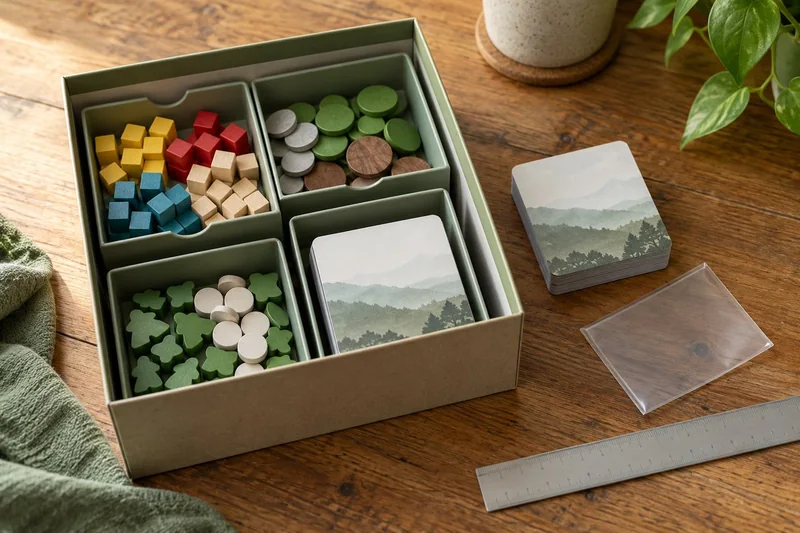
Wingspan Americas: update the storage plan before adding the new cards
Treat Americas as a mixed-component expansion, not simply another stack of bird cards.
Read the guide →
Wingspan Vision-Friendly Cards: replace the set without confusing the deck
If Wingspan’s card text is the obstacle, I would try the publisher’s Vision-Friendly cards before buying generic magnifiers or printing unofficial…
Read the guide →